
The decision is based on the recommendations of an expert committee set up by the Centre and Uttar Pradesh government to review security arrangements at Ayodhya and the other three places following the terrorist strike.
The Act prohibits conversion of any place of worship and provides for the maintenance of the religious character of any place of worship as it existed on August 15, 1947.

The Supreme Court on Tuesday granted time till October 31 to the Centre to file its response to a batch of pleas challenging certain provisions of a 1991 law that prohibits filing of a lawsuit to reclaim a place of worship or seek a change in its character from what prevailed on August 15, 1947.

The apex court has set October 18 as deadline for completion of all arguments in the protracted land title dispute, a move that has raised the possibility of a verdict in the politically sensitive case in the middle of November.
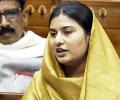
Samajwadi Party leader and Kairana MP Iqra Choudhary has moved the Supreme Court seeking effective implementation of the Places of Worship (Special Provisions) Act, 1991. This move comes amidst several petitions challenging the law's validity, including those filed by the Akhil Bhartiya Sant Samiti and lawyer Ashwini Upadhyay. The Supreme Court, in December 2022, had restrained all courts from examining fresh suits and passing interim orders in pending cases seeking to reclaim religious places. The Act aims to maintain the religious character of places of worship as they existed on August 15, 1947, but the dispute relating to Ram Janmabhoomi-Babri Masjid at Ayodhya was kept out of its purview. The court has listed Choudhary's plea with other pending pleas for February 17.

The issue of Lord Rama grabbed headlines again on Monday when Art of Living founder Sri Sri Ravi Shankar said he would travel to Ayodhya and open talks with stakeholders in the Ram Janmabhoomi-Babri Masjid dispute on November 16.
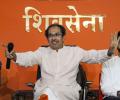
We had requested the government to make a law on construction of Ram Temple but the government did not do that, Thackeray said.

"This has to be deprecated. This is something which should not be happening," a five-judge Constitution bench headed by Chief Justice Ranjan Gogoi said.
"It can stay awake till midnight to hear the Yakub Memon case and it can extend the hearing of the Ram Janmabhoomi title case for three months, while crores of Indians wait for it."

The Vishwa Hindu Parishad and the Bajrang Dal have announced that they will mark the day as Shaurya Diwas and Vijay Diwas (day of victory) and have asked the people to light earthen lamps as on Diwali.

Can ordinary citizens counter this backward march? Can peace activists ensure that the two communities retain their bonds? Do they have a choice, asks Jyoti Punwani.
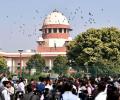
A bench comprising Chief Justice Sanjiv Khanna and Justice Sanjay Kumar also indicated that it may not take up the pending scheduled petitions, heard earlier by a three-judge bench, during the day as it was sitting in a combination of two judges.
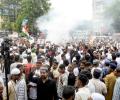
Congress MP Mohammad Jawed and AIMIM president Asaduddin Owaisi have challenged the validity of the Waqf (Amendment) Bill, 2025 in the Supreme Court, arguing that it violates constitutional provisions. The petitions claim the bill imposes arbitrary restrictions on Waqf properties and their management, undermining the religious autonomy of the Muslim community. They also allege that the bill discriminates against Muslims by imposing restrictions not present in the governance of other religious endowments. The bill was passed in the Rajya Sabha and Lok Sabha, with the petitioners arguing that it introduces limitations on the creation of Waqfs based on the duration of one's religious practice, mandates inclusion of non-Muslim members in Waqf administrative bodies, and shifts key administrative functions to government officials, thereby diluting the autonomy of Waqf management.
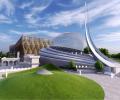
The Allahabad high court on Monday dismissed a petition filed against the allotment of land in Ayodhya's Dhannipur village for the construction of a mosque, following the Supreme Court verdict in the Ram Janmabhoomi-Babri Masjid dispute.
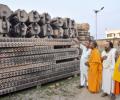
The event will be marked by prayers to Lord Shiva at the Kuber Tila shrine on the Ram Janmabhoomi site, allocated for the temple in a historic Supreme Court verdict last November.

Das served as the head priest since he was 20 years old, including during the demolition of the Babri Masjid on December 6, 1992.
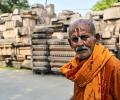
The Supreme Court will hear on April 5 a batch of PILs challenging the validity of certain provisions of a 1991 law that prohibits filing of a lawsuit to reclaim a place of worship or seek a change in its character from what prevailed on August 15, 1947.
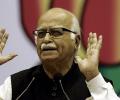
The Supreme Court on Monday kept its options open on examining the dropping of conspiracy charge against accused like L K Advani, M M Joshi and Uma Bharti in the demolition of the disputed Ram Janmabhoomi-Babri structure in Ayodhya in 1992.

"Shouldn't they get Indian citizenship? Shouldn't their human rights be protected?" Shah asked the audience which responded with a resounding "yes".

The NBSA, a self regulating body for news channels, also advised channels that no footage of the demolition of the Babri Masjid is to be shown in any news item relating to the Ayodhya matter.

He further said that time has come to discuss the issue of Ram Temple and should try to find a permanent solution.

A plea claimed that Bhaskar had made "derogatory and scandalous" statements against the courts in the country and mentioned the Ayodhya case judgement.
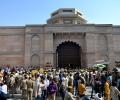
In an unusual coincidence, the two judges of a Supreme Court bench hearing a plea against the survey of the Gyanvapi-Shringar Gauri complex in Varanasi have had an association with a similar kind of dispute relating to the Ram Janmabhoomi-Babri masjid issue as well.
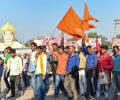
Rashtriya Swayamsevak Sangh executive head Bhaiyyaji Joshi has expressed confidence that the Ram temple will be constructed in Ayodhya by the time of next 'Kumbh'.

The 1991 provision is an Act to prohibit conversion of any place of worship and to provide for the maintenance of the religious character of any place of worship as it existed on August 15, 1947, and for matters connected therewith or incidental thereto.
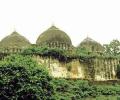
Sources said the parties have sought settlement under the provisions of The Places of Worship Act, 1991 which provides that no dispute with regard to any mosque or other religious places, which have been constructed after demolition of temples and are existing as in 1947, would be raised in a court of law.
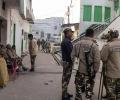
A four-member team from the Archaeological Survey of India (ASI) conducted a survey of the recently-discovered Shri Kartik Mahadev temple, five pilgrimage sites, and 19 wells in Sambhal, Uttar Pradesh, India. The survey followed the discovery of three damaged idols inside a well of the Bhasma Shankar temple, which was reopened after being shut for 46 years. The Shri Kartik Mahadev temple, also known as the Bhasma Shankar temple, was reopened on December 13 after authorities found the covered structure during an anti-encroachment drive. The temple houses an idol of Lord Hanuman and a Shivling and had remained locked since 1978. The district administration has requested carbon dating of the temple, including the well, from the ASI. Meanwhile, the Supreme Court has restrained courts across India from entertaining new lawsuits or passing any orders in pending ones seeking to reclaim religious places, especially mosques and dargahs, until further notice. This action halts proceedings in approximately 18 lawsuits filed by Hindu parties seeking surveys to determine the original religious character of 10 mosques, including the Gyanvapi at Varanasi, the Shahi Idgah Masjid at Mathura, and the Shahi Jama Masjid at Sambhal, where four individuals died in clashes. The Supreme Court will examine the legality, scope, and boundaries of the Places of Worship (Special Provisions) Act, 1991, which prohibits the conversion of places of worship and ensures the preservation of their religious character as it existed on August 15, 1947.
The Supreme Court of India will hear a plea from the mosque management committee challenging an order rejecting its petition in the Krishna Janmabhoomi-Shahi Idgah dispute in Mathura, Uttar Pradesh on January 15. The Allahabad High Court had rejected the mosque committee's plea, stating that the religious character of the Shahi Idgah mosque needed to be determined. The case involves claims that the mosque was built after the demolition of a temple, a claim disputed by the mosque committee. The Supreme Court will now decide on the maintainability of the mosque committee's plea.

'Attending roza-iftar with a skull cap is not secularism. People also know that this is drama'

The judge said the CBI's case became weaker or "forceless" in view of the fact that it did not probe and ruled out the Pakistan angle to the demolition to make the criminal conspiracy charge stand the judicial scrutiny.

The Hindu litigants claim the mosque holds signs suggesting that it was a temple once.
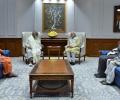
The meeting came a day after the Shri Ram Janmabhoomi Teertha Kshetra, set up recently to oversee the construction of a Ram temple in Ayodhya, met for the first time on Wednesday.
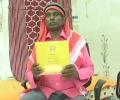
'All this (temple's construction) will change the fate of Ayodhya. We all want our child to get better opportunities'
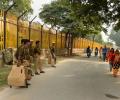
'We will not accept this lollypop. They must make clear that where they want to give us the land'

Thousands of Shiv Sainiks are expected to accompany Eknath Shinde on his visit to Ayodhya on Sunday, his first such visit after being sworn in as the Chief Minister of Maharashtra in June last year.

'During the Congress rule, the solicitor general had submitted an affidavit in the Supreme Court, stating that the government would side with the sentiments of the Hindu community if an evidence was found of a razed temple, where the mosque was built'

The Shankaracharya said the sadhus will begin their march to Ayodhya from Allahabad after Basant Panchami, which falls on February 10.
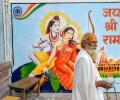
The lawyers said the mediation panel's report was leaked to the media and they do not approve the procedures adopted in the process and the suggested compromise formula of withdrawal of the lawsuit.
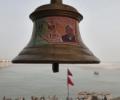
With the Muzaffarnagar riots still fresh in its mind, the Centre has asked the Uttar Pradesh government to maintain status quo in Ayodha, where the Vishwa Hindu Parishad has called for a 'Sankalp Diwas' rally, and prevent any attempt to incite communal tension anywhere in the state.

He hinted that the same hue and cry is not made about 1984 riots not being in textbooks.
 © 2026 Rediff.com - Advertise with us - Disclaimer - Privacy Policy - Sitemap - Feedback - About us - Terms of use - Grievances